Constance
New Life as a Max Level ArchmageConstance is the First-Class White Glove and Deputy Headmistress of the White Glove Academy, defined by command, vigilance, and an almost immediate readiness to use force in defense of the institution under her protection. Her encounter with Vivisari Vexaria first presents her as an imposing guardian confronting an unknown intruder, but the scene later overturns that interpretation: the terrifying invader is the mistress of the manor, and Constance is not merely its defender but Barnaby Caldimore’s eldest daughter. Her significance lies in the collision between flawless martial authority and a dangerously mistaken judgment.
Identity and Authority
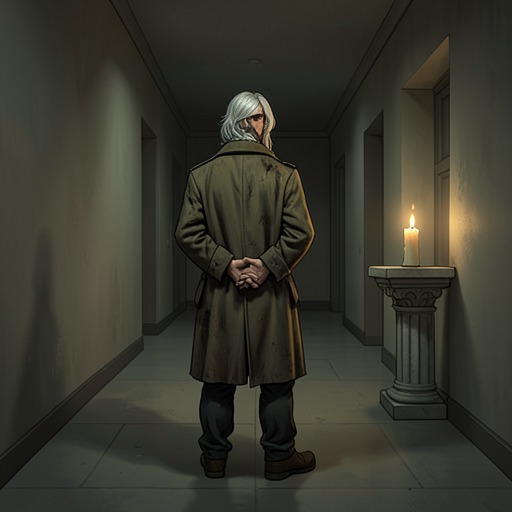
Constance announces herself through presence before biography. As Vivisari Vexaria approaches the manor, she notices the unusually large number of maids and butlers training across the grounds as though they owned the estate. At the top of the huge staircase leading to the palatial manor, Constance strides out: tall and thin, with gray hair arranged in a bun and severe features that make even a nunnery matron seem warm by comparison. Her cold command is perceptible from dozens of feet away, establishing her as a figure whose authority does not depend on explanation.
Her first command is an order to halt and identify the intruder. The tone is neither openly aggressive nor hostile; instead, it carries the authority of a general, the kind of command that assumes obedience and receives it. Vivisari obeys by instinct because Constance’s manner promises consequences for refusal. This combination of restraint and coercive certainty is central to Constance’s characterization: she does not need bluster to dominate a scene, because her authority is already embodied in her voice and bearing.
Constance’s institutional status reinforces that impression. She is a White Glove of the First Class and a Titled, and Nicole regards the possibility of her losing a duel while defending the Academy as ludicrous. The Academy’s defenders are expected to be extraordinarily capable, and Constance occupies a position near the center of that defensive order. Her title is therefore not decorative. It explains why the students treat her as nearly unassailable and why an assault on the estate’s protections becomes an institutional emergency rather than a private quarrel.
The Misidentified Invasion
The confrontation begins because Constance and the other inhabitants misunderstand Vivisari’s arrival. The manor is Vivisari’s former home, but the estate has been transformed into the White Glove Academy, and the armed, highly trained servants make the place appear occupied by an organized force. Vivisari herself is distracted by the overwhelming sight of her home restored in the flesh and fails to draw the obvious conclusion about the Academy’s presence. Constance, seeing an unidentified woman at the estate, acts on the opposite error: she treats the mistress as an invader.
After only a few sentences of conversation, Constance decides that attacking is the best course. She points her enormous battle axe, Patience, toward Vivisari. The weapon’s name becomes an understated joke because Constance displays very little of the virtue it invokes; Nicole knows her as someone who lacks patience, and the rapid transition from questioning to combat confirms the judgment. Yet the name also gives the weapon an ironic dignity. Constance’s impatience is not simple recklessness. She is responding to a perceived breach of the Academy, and her haste grows from a defender’s conviction that delay may endanger everyone inside.
Her attack demonstrates why the Academy’s confidence in her is justified. Though Nicole possesses the speed, strength, and perception of someone two hundred levels higher while in active service, she can barely see Constance move. Constance seems to materialize before Vivisari, and Patience falls like an executioner’s blade. Vivisari avoids the strike by millimeters, but the axe still removes a huge section of the paved path, continuing forward to rip through the pavement and yard. The missed blow therefore remains a successful display of destructive force: Constance is not posturing but wielding a weapon capable of reshaping the grounds around her.
The battle also exposes the limits hidden beneath that terrifying competence. Vivisari releases white-and-violet lightning that blasts Constance across the yard, throws soil into a long streak, and leaves her climbing from a crater. Constance must wrench Patience from the stone where it has embedded itself; smoke pours from her body, and even the Academy’s exceptionally durable uniform is torn by the impact. She falters for only a moment before vanishing in another burst of speed and reentering the fight. Nicole nevertheless notices the weakness. For the first time, the Deputy Headmistress appears vulnerable, and the revelation intensifies rather than diminishes her presence: Constance is powerful enough to continue after an explosive magical strike, but not invulnerable.
Recognition and Reversal
The decisive change comes when the fight ends and Vivisari addresses the woman who was effectively her first and primary opponent. Rather than treating Constance as an enemy, Vivisari thanks her for the spar and asks whether Winston trained her well and whether she is hurt. The question collapses the apparent invasion into a private and institutional misunderstanding. Constance’s conduct, however severe during the battle, has not been malicious; she was protecting the Academy from someone she believed to be a dangerous intruder.
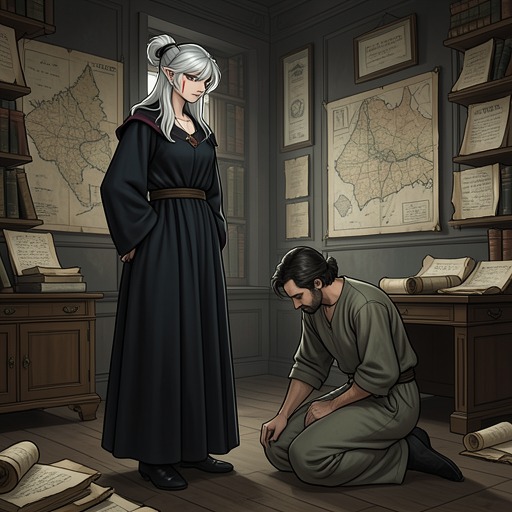
Constance responds by dismissing Patience, which melts into silver smoke, and curtsying stiffly before offering her deepest apology to Mistress Vivisari. She accepts responsibility for failing to appraise the situation carefully and calls her own actions unforgivable. The apology is striking because the observable facts do not place all the blame on her. Vivisari recognizes that her own reasoning was absurd: she had wanted to fight a formidable combat maid and had simply failed to discourage the confrontation. Constance’s formal remorse therefore reveals a rigid ethical structure in which defensive error remains a serious failure, even when the mistake arose from loyalty and vigilance.
The reversal also gives Constance a capacity for surprise. She first appears almost like an impersonal military force, issuing orders and attacking with disciplined violence; afterward, she submits to correction, apologizes, and returns to the role of subordinate before the estate’s true mistress. This does not erase her severity. Instead, it shows that the severity has a social and professional shape: Constance can be terrifying in defense, but she can also recognize authority, acknowledge error, and restore order once the truth is known.
Family and Institutional Relationships
Barnaby Caldimore identifies Constance as his eldest daughter. This disclosure changes the meaning of her authority. Her command over the Academy is not merely that of a senior employee or combat instructor; it is connected to the Caldimore family, whose presence anchors the institution’s hierarchy. Her identity joins three roles that the encounter initially keeps separate: daughter, Deputy Headmistress, and First-Class White Glove.
Her relationship with Barnaby also places the battle within a family and household structure rather than a purely military one. The servants and attendants trained under the Academy’s system are not a random guard force, and Constance’s actions demonstrate that their protection of the estate is organized around a real chain of command. The later recognition between Vivisari and Constance makes the chain visible: Vivisari is the mistress whose home has become the Academy, while Constance is the senior protector who has taken responsibility for its defense.
Constance’s connection to Winston is likewise revealed indirectly through Vivisari’s acknowledgment that Winston trained her. That remark presents Constance as a product of deliberate martial instruction and links the old household’s service traditions to the Academy’s current defensive culture. Her skill is therefore both personal and inherited through institutional training. She embodies the continuity between Vivisari’s former estate and the new school built upon it.
Character Function and Thematic Significance
Constance functions as a threshold guardian in the episode: she stands at the staircase and physically controls access to the manor, forcing the returning mistress to confront the institution that now occupies her home. The role is inverted when the guardian misidentifies the person crossing the threshold. Her error creates the scene’s central irony, but it also dramatizes the price of absolute defensive readiness. A protector trained to respond decisively can become unable to pause long enough to recognize a familiar truth.
The scene balances fear with admiration. Constance’s severe appearance, general-like voice, battle axe, impossible speed, and crater-making exchange with Vivisari produce the awe associated with overwhelming power. At the same time, the comedy of naming the axe Patience, the absurdity of attacking the estate’s owner, and Constance’s stiff apology prevent her from becoming a one-note embodiment of violence. She is formidable, disciplined, and capable of error; her surprise is convincing because it grows directly from the same loyalty that makes her dangerous.
Her final position is not one of defeat but of reclassification. Constance is revealed as neither an enemy nor an uncontrolled monster, but as the Academy’s eldest and most authoritative defender, a woman whose judgment can fail while her commitment remains intact. The encounter leaves her with the embarrassment of having attacked the mistress she was supposed to protect, while leaving Vivisari confronted with her own impulsiveness. Their meeting therefore establishes a reciprocal lesson: Constance must appraise before striking, and Vivisari must recognize that returning to a transformed home carries obligations beyond the pleasure of testing its strongest guardian.